How Smaller Assisted Living Neighborhoods Support Households Facing Dementia
@danteogzm686
September 24, 2026 · 20 min read
Business Name: BeeHive Homes of Draper
Address: 711 Pioneer Rd, Draper, UT 84020
Phone: (801) 495-3100
BeeHive Homes of Draper
Full service assisted living facility serving southern Salt Lake County offering all-inclusive Memory Care, Assisted Living, and Senior/Adult Day Care services.
711 Pioneer Rd, Draper, UT 84020
Business Hours
Families hardly ever start their search for dementia care with a clear plan. More often, it starts with a fall, a frightening episode of roaming, or a phone call from a next-door neighbor who discovered something is incorrect. By the time people inquire about assisted living or memory care, they are normally exhausted, guilty, and uncertain what "excellent care" even looks like.
That uncertainty is reasonable. The senior care landscape is confusing, the language is irregular, and the stakes feel painfully high. One of the most essential choices families deal with is the size and kind of community they pick. Large structures with numerous locals look outstanding on brochures, however smaller sized assisted living and memory care settings frequently supply something households frantically need: intimacy, versatility, and customized assistance for dementia care.
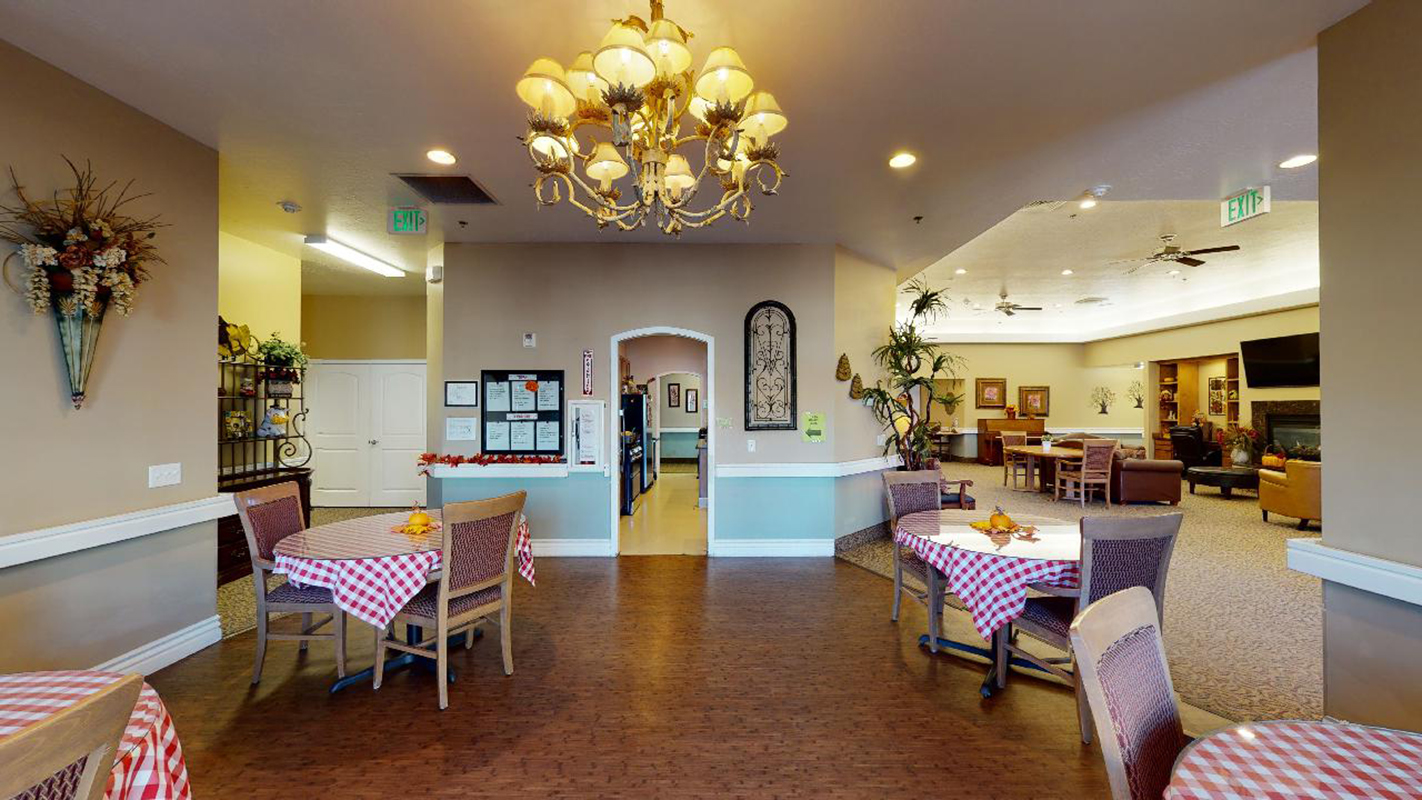
This is not merely a matter of taste. The size and culture of a community impact nearly everything that occurs inside it, from the method medication is provided to how a tough night gets dealt with when someone is sundowning and refusing to go to bed.
Why size and scale matter for dementia care
Dementia modifications how an individual experiences the world. Noise, visual clutter, and constant complete strangers can feel frustrating. Complex regimens can puzzle. Staff who do not know the resident's history may misinterpret habits that has a clear trigger.
In big senior care neighborhoods, it can be difficult to control these factors. The building itself typically dictates the environment: long corridors, large dining rooms, a turning cast of caregivers covering numerous floorings. That model can work for some older adults who are physically frail but cognitively undamaged. It is less ideal for somebody who has actually forgotten where their space is or who becomes distressed when surrounded by lots of individuals at mealtimes.
Smaller assisted living or committed memory care neighborhoods, especially those developed for 6 to 40 locals, run really differently. The environment feels more like a home than an organization. Personnel can reasonably know each resident and family by name, comprehend their routines, and area subtle modifications early.
Size alone does not ensure quality, however it ensures excellent practices a lot more feasible.
What "little" frequently looks like in practice
Families sometimes photo "little" as less equipped or less professional. In reality, many of the greatest dementia care programs I have seen remain in:
- Standalone memory care homes with 6 to 16 residents, often transformed houses or purpose-built single story homes
- Boutique assisted living communities with one or two little buildings and under 50 residents per building
These settings are typically accredited as assisted living or residential care, sometimes with a devoted memory care endorsement depending upon state policies. They generally offer help with bathing, dressing, meals, medications, and daily supervision, plus structured dementia care programming.
The secret difference is scale. A caregiver in a small community may be accountable for 4 to 8 residents instead of 12 to 18. The nurse can walk the whole building in a couple of minutes. Households can discover the executive director without navigating a corporate phone tree.
Smaller size also suggests fewer layers in between individuals who set policy and the people who provide care. If something is not working, it is easier to change quickly.
The psychological reality for families
When a parent or spouse develops dementia, families are not simply purchasing real estate. They are grieving the loss of the individual they understood, while still needing to promote for the individual who remains.
In conversations with adult kids making these decisions, numerous styles repeat:
They feel guilty that they can not "do it all" at home.
They fret their loved one will feel abandoned. They fear institutional environments that strip people of their identity. They are worn out, often alarmingly so, after months or years of caregiving.Small assisted living and memory care settings can ease some of that emotional burden in manner ins which are easy to miss on a checklist.
In a smaller place, families tend to see the exact same faces each time they visit. They develop relationships not just with a director and nurse, however with the caretakers who deal with dressing, meals, and individual care. These regular interactions make it easier to share information about the resident's history and choices, and to get honest feedback about how things are going.
One child told me that in the large community they tried first, she seemed like a visitor at a hotel. After moving her mother to a 12 bed memory care home, she stated, "Now when I come in, they hand me a cup of coffee, tell me what type of early morning she had, and ask how I am doing too." That sense of partnership is not a luxury. It is a protective factor for both the resident and the family.
How smaller communities adjust life for dementia
Dementia care is not simply "more assisted living." It requires particular, constant adaptations in the environment and everyday regimen. Smaller sized communities are frequently much better placed to supply these in a continual, human way.
Familiar routines and versatile schedules
In a big building, schedules tend to be rigid, because staff have to move dozens of individuals through meals, medications, and activities. Anyone who withstands or moves slowly can seem like a problem to be resolved quickly.
Smaller settings typically have more versatility. Breakfast might be readily available over a longer window, and caretakers can change individual care regimens based on when each resident is most cooperative. That flexibility matters a lot for someone with dementia who wakes up disoriented or is calmer in the afternoon than the morning.
I have actually seen caregivers in little homes move a whole bathing schedule around one resident who did much better with evening showers, simply due to the fact that they could. They did not have to run the concept through three levels of management or rewrite a whole staffing plan.
Sensory environment and noise
Dementia frequently makes people more conscious noise and visual stimuli. A crowded dining-room with clattering meals, overlapping discussions, and background music can tip somebody from a little puzzled into fully agitated.
In a small assisted living or memory care home, dining rooms are usually intimate. There might be 2 smaller sized tables rather of one large one, with personnel flowing at eye level, not rushing behind carts. The kitchen might be visible, enabling residents to smell food cooking, which can stimulate cravings and enhance a sense of regular home life.
Common locations in little communities also tend to be less aesthetically frustrating. Less corridors, less doorways, less individuals moving unexpectedly. For an individual whose brain is currently working overtime to translate the world, that simplicity can decrease stress and anxiety significantly.
Staff continuity and relationship-based care
One of the clearest advantages families notice is staff consistency. Since smaller communities need fewer workers in general, schedules are often constructed around steady core groups. That stability allows authentic relationships, which are particularly valuable in dementia care.
When the very same caregiver works with your mother each morning, they discover how to approach her so she does not feel threatened throughout bathing. They discover that she prefers her cardigan before breakfast, or that she consumes more when fruit is offered initially. These are not small details. They can be the difference between a calm day and a series of behavioral escalations.
In big, highly staffed centers, turnover and rotation can be higher. Even when individual caregivers are kind and capable, the constant flow of new faces can be disorienting for residents and exhausting for households who need to re-explain history and choices with every change.
Support beyond the resident: how families are cared for
Good senior care neighborhoods comprehend that dementia affects whole household systems. The caregiving spouse or adult child frequently needs as much assistance as the resident does. Smaller sized neighborhoods are uniquely placed to supply that assistance informally, which for many families feels more natural and accessible than official programs.
Communication that feels human, not corporate
Regular, sincere communication is the primary factor that figures beehivehomes.com assisted living out whether families feel great in a care setting. In small assisted living and memory care neighborhoods, there are simply fewer individuals associated with choice making. You are more likely to hear straight from the nurse or director about medication modifications, behavioral shifts, or health concerns.
Instead of automated e-mails and mass newsletters, updates might come as fast telephone call or text: "Your dad has been a little bit more unsteady today. We are keeping a better eye on him and would like to talk about physical therapy." This style of communication develops trust, and trust makes it simpler to weather the inevitable difficult days.
Families also tend to feel more comfortable raising issues, since they know who to talk to and do not feel like they are entering into a protest procedure every time they have a question.
Emotional assistance and casual coaching
Many caregivers silently admit they do not fully comprehend dementia. They confuse typical illness development with "bad days," or translate resistance as stubbornness instead of fear. Smaller sized communities often respond to this more organically.
An experienced caretaker may pull a spouse aside and say, "When he says he wishes to go home, he might be searching for safety, not a specific home. Here is how we typically respond when he remains in that state of mind." These off the cuff discussions, built on familiarity and trust, can change how households approach visits.
In a larger setting, comparable education might technically exist, however get lost in set up workshops that households can not participate in because they are juggling tasks, kids, and appointments. Smaller sized neighborhoods can weave education into daily interactions.
The role of respite care in smaller settings
Not every household is prepared for a complete shift to assisted living or memory care. Some wish to keep their loved one in your home as long as possible, however need breaks to rest, travel, or recover from their own health concerns. This is where respite care ends up being a necessary tool.
Respite care describes short term remains in a senior care community, normally from a few days to numerous weeks. Smaller sized communities that provide respite stays can be particularly valuable for families dealing with dementia, for numerous reasons.
First, the environment is less overwhelming for someone can be found in from home. There are fewer new faces and an easier layout to find out. Staff can take some time to comprehend the person's routines and choices, since there are not 150 other citizens showing up and leaving.
Second, respite stays in small neighborhoods can double as a gentle trial run. Families can see how their loved one responds to a different environment without making an instant long term commitment. I have actually seen households use three or 4 different respite stays over a year before choosing an irreversible move, each time changing care methods based upon what they learned.
Finally, respite care protects caregivers from burnout. A typical pattern is a dedicated partner or adult kid caring alone in the house till a crisis forces an emergency situation positioning. Short breaks in a familiar little neighborhood can prevent that cliff, extending safe care at home while building a relationship with a team that might eventually end up being the full-time care provider.
Safety, supervision, and dignity in small environments
Families are not surprisingly focused on safety when dementia is in the photo. They fret about wandering, falls, kitchen area mishaps, and medication mistakes. Smaller sized assisted living and memory care communities frequently have advantages here, but the image is nuanced.
With fewer locals and more compact areas, staff can keep track of movement and behavior better. If a resident tries to exit through a door, there is a great chance a caregiver neighbors, not on the far side of a massive building. Alarms, protected yards, and door codes may still be utilized, however they complement, instead of replace, human observation.
There is likewise more chance to offer guidance that protects dignity. For example, instead of calmly disabling an elevator button or locking every door, a caretaker who understands the resident may redirect with a familiar job or simple walk: "Let us go examine the garden together initially." It is much easier to do this regularly when staff are not stretched across several wings.
However, there are trade offs. Little neighborhoods usually have fewer on site resources than large schools. A big building may have on website physical therapy health clubs, comprehensive activity personnel, or a dedicated medical center. A smaller home may contract those services or supply them in a more modest kind. Households have to consider which matters more for their specific situation: focused personal attention, or the convenience of numerous features under one roof.
Trade offs and when a small setting may not be ideal
While I have actually seen numerous successes in little assisted living and memory care environments, they are not instantly the best suitable for everyone with dementia.
Some individuals, particularly those who are extremely social or physically active, may choose a larger setting with more structured group activities, numerous dining choices, or on site religious services. An extremely shy person might prosper in a cottage where the exact same 10 people share meals every day, however somebody who has actually constantly liked hectic environments may find it too quiet.
There are also medical considerations. People with innovative dementia often establish intricate physical illness. In some areas, large senior care communities partner closely with on site physicians, treatment service providers, and even immediate care clinics, which can reduce trips out to consultations. A really little memory care home may handle similar needs well, or might rely more heavily on external providers and household transportation, depending upon staffing and regional regulations.
Cost is another aspect. Smaller sized, more intimate settings can be more expensive monthly, especially if they preserve low resident to personnel ratios. On the other hand, some residential care homes are surprisingly cost effective compared to high end large centers, specifically because they do not invest in grand lobbies and comprehensive facility spaces.
It is essential for families to look beyond marketing language like "homelike" or "cutting-edge" and evaluate healthy based upon the person's history, personality, medical needs, and stage of dementia.
What to look for when visiting a little assisted living or memory care community
Once you have determined a couple of smaller sized neighborhoods, the tour is where you will gather the details that matters beyond shiny sales brochures. A good tour in a small setting need to feel like being welcomed into somebody's home, not accompanied through a sales presentation.
When you visit, focus on how staff interact with citizens in real time. Are names utilized regularly? Do caretakers make eye contact and speak at a calm, determined pace? Notice whether homeowners appear unwinded, engaged, and appropriately groomed. Listen for laughter along with the periodic outburst, which is typical in dementia care however must be met with calm, competent responses.
It also assists to have a focused set of questions, preferably written down. For many families, this list works well:
- What is your typical staff to resident ratio throughout days, evenings, and nights, specifically in the memory care or high needs location?
- How long have the majority of your caregivers and nurses worked here, and who supplies direct dementia care training?
- How do you manage medical modifications or behavioral crises, and who contacts families when something substantial takes place?
- Do you offer respite care stays, and if so, how are those citizens incorporated into life?
- How do you support households emotionally and practically as dementia advances, particularly around difficult choices like hospice?
Their responses will inform you not only about policies, however likewise about worths. A director who illuminate when talking about their team's longevity and training, or who easily shares specific stories about how they handled a difficult situation, is offering you more than details. They are offering you insight into the culture your family would be joining.
Integrating home, health center, and community care
Dementia care does not take place in isolation. Throughout the disease, households normally browse a web of assistances: medical care doctors, neurologists, hospitals, home health agencies, hospice, and several senior care communities.
Smaller assisted living and memory care settings often play a quiet coordinating function in this network. Due to the fact that they know homeowners carefully, they are well positioned to notice subtle indications that something is off: a change in gait, brand-new confusion, reduced appetite, or disrupted sleep. This can set off timely medical assessment, avoiding bigger crises.
From a family point of view, it is much easier to coordinate when there is a single point person in the community who understands both the resident and the outside companies. In a lot of little settings, that person is a nurse or manager who has worked there enough time to comprehend the circulation of the regional health system.

When done well, this coordination decreases unnecessary hospitalizations, supports smoother shifts to hospice when proper, and keeps families notified and involved, rather than blindsided by unexpected changes.
Making peace with the decision
No senior care setting, large or little, can get rid of all the pain of seeing dementia development. What it can do is share the weight of caregiving in such a way that preserves dignity for the individual with dementia and sustainability for the family.
Smaller assisted living and memory care neighborhoods are typically much better suited to that job since they operate on a scale that matches human relationships. Staff can genuinely know residents as individuals. Families can form real partnerships with the people supplying daily dementia care. Changes can be made quickly, based on observation instead of bureaucracy.
That does not imply every little neighborhood is right, or that larger settings have absolutely nothing to provide. The very best choice is the one where your loved one is seen, comprehended, and regularly supported, and where you, as household, feel included rather than sidelined.
If you reach that point in a little, peaceful memory care home with 12 citizens and a well used sofa in the living-room, you have not "given up." You have broadened the circle of individuals who care about your parent or spouse. For most families dealing with dementia, that is not a failure of duty. It is an act of love, and typically, an extensive relief.
BeeHive Homes of Draper provides assisted living care
BeeHive Homes of Draper provides memory care services
BeeHive Homes of Draper provides respite care services
BeeHive Homes of Draper supports assistance with bathing and grooming
BeeHive Homes of Draper offers private bedrooms with private bathrooms
BeeHive Homes of Draper provides medication monitoring and documentation
BeeHive Homes of Draper serves dietitian-approved meals
BeeHive Homes of Draper provides housekeeping services
BeeHive Homes of Draper provides laundry services
BeeHive Homes of Draper offers community dining and social engagement activities
BeeHive Homes of Draper features life enrichment activities
BeeHive Homes of Draper supports personal care assistance during meals and daily routines
BeeHive Homes of Draper promotes frequent physical and mental exercise opportunities
BeeHive Homes of Draper provides a home-like residential environment
BeeHive Homes of Draper creates customized care plans as residents’ needs change
BeeHive Homes of Draper assesses individual resident care needs
BeeHive Homes of Draper accepts private pay and long-term care insurance
BeeHive Homes of Draper assists qualified veterans with Aid and Attendance benefits
BeeHive Homes of Draper encourages meaningful resident-to-staff relationships
BeeHive Homes of Draper delivers compassionate, attentive senior care focused on dignity and comfort
BeeHive Homes of Draper has a phone number of (801) 495-3100
BeeHive Homes of Draper has an address of 711 Pioneer Rd, Draper, UT 84020
BeeHive Homes of Draper has a website https://beehivehomes.com/locations/draper/
BeeHive Homes of Draper has Google Maps listing https://maps.app.goo.gl/LgtrXf95hQFVgKrY8
BeeHive Homes of Draper has Facebook page https://www.facebook.com/BeeHiveDraper/
BeeHive Homes of Draper won Top Assisted Living Homes 2025
BeeHive Homes of Draper earned Best Customer Service Award 2024
BeeHive Homes of Draper placed 1st for Utah Senior Living Communities 2025
People Also Ask about BeeHive Homes of Draper
What is BeeHive Homes of Draper Living monthly room rate?
Our monthly rates for both Assisted Living and Memory Care at BeeHive Homes of Draper are thoughtfully designed to be all-inclusive. While pricing reflects each resident’s unique care needs, families appreciate that once a rate is established, it remains stable - no hidden fees or surprise increases as care evolves. We believe in clarity, consistency, and peace of mind
Can residents stay in BeeHive Homes of Draper until the end of their life?
In many cases, yes. We are honored to support residents throughout their journey, including end-of-life care, right here in the comfort of our Draper home. There are rare occasions when medical needs exceed our licensing (such as 24-hour skilled nursing) but we’ll always guide families through any transition with care and compassion
Do we have a nurse on staff?
Yes, we do. Our Registered Nurse, Jacque Parker, R.N., works closely with local home health nurses and house-call physicians to coordinate excellent care. This collaboration allows us to meet a wide range of health needs right here at home
What are BeeHive Homes of Draper's visiting hours?
We know how important it is to stay close to loved ones. That’s why visiting hours at our Draper home are flexible and designed around what works best for the resident. You’re welcome to visit during the day... just try not to come to early and stay too late
Do You Offer Rooms for Couples?
Yes, we do! BeeHive Homes of Draper offers select suites for couples who wish to continue living together while receiving care. These shared accommodations preserve comfort and connection while ensuring both individuals get the personalized support they need. Availability is limited, so reach out to learn more
Do You Provide Senior Day Care or Respite Services?
Absolutely. Our senior day care and short-term respite care options are perfect for families who need extra help during the day or while traveling. Guests enjoy the same high-quality care, engaging activities, and home-cooked meals as our full-time residents, all in a safe, social environment. We’ll help you find a care plan that fits your schedule and your loved one’s needs.
What’s the Difference Between Assisted Living and Memory Care?
Assisted living is best for seniors who benefit from help with daily activities but still enjoy socializing and independence. Memory care is a more structured service tailored to individuals with Alzheimer’s or other cognitive conditions, with routines, guidance, and security that support safety and emotional well-being.
Where is BeeHive Homes of Draper located?
BeeHive Homes of Draper is conveniently located at 711 Pioneer Rd, Draper, UT 84020. You can easily find directions on Google Maps or call at (801) 495-3100 Monday through Sunday Open 24 hours
How can I contact BeeHive Homes of Draper?
You can contact BeeHive Homes of Draper by phone at: (801) 495-3100, visit their website at https://beehivehomes.com/locations/draper/ or connect on social media via Facebook
Stonebridge Park is a relaxing neighborhood park that complements the active lifestyles encouraged through Assisted living, memory care, senior care, elderly care, and respite care.